
Deloitte predicts that by 2030, a quarter of all e-commerce will be handled by AI agents. Agentic Commerce is fundamentally changing the way products are found and purchased – and raises specific questions for manufacturers with their own online shops: Which of these developments are already a reality today?
Contents
Let’s imagine an established manufacturer. GartenProfi AG, based in southern Germany, with around 1,000 employees, specialising in sun protection and patio systems. Several sales channels operate in parallel: its own online shop on Shopware, a marketplace presence on Amazon and with other retailers, plus traditional specialist retailers. The SEO team has done a good job; the Google rankings are solid, and the shop is performing well.Then something happens that GartenProfi doesn’t even notice at first: a customer planning a patio canopy no longer asks Google. They ask ChatGPT. And ChatGPT recommends a competitor – not because their product is better, but because their product data is more complete and machine-readable.
This is happening today, in exactly this way.
What’s happening right now
Shopping is already built into the major AI platforms – ChatGPT with an integrated purchasing function, Google Gemini with its first shopping agents, and Perplexity with product comparisons including direct purchase options. The customer doesn’t need to install, configure or log in to anything: they simply ask a question and receive a purchase recommendation.
According to EY, 70 per cent of consumers are already using AI for product and price research; McKinsey estimates that 50 per cent of people use AI when searching online. Deloitte goes one step further and predicts that by 2030, a quarter of all e-commerce will be handled by AI agents.
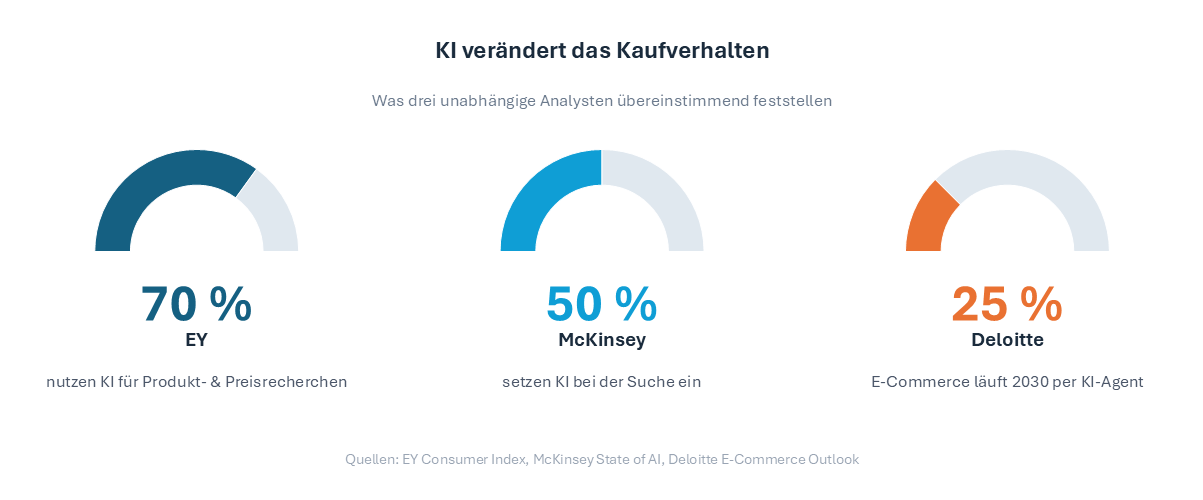
Fig. 1: EY, McKinsey and Deloitte are all pointing in the same direction.
There is no need to blindly trust such forecasts. Analysts are regularly wrong – in both directions. However, when McKinsey, Deloitte, EY and the major platform providers all point in the same direction, it is a signal that cannot be ignored.
For GartenProfi, this means in practical terms: the Google rankings that have been painstakingly built up are not losing their value, but alongside them a second channel is emerging that operates according to completely different rules.
How the customer journey is changing
Until now, making a purchase has been an active journey. The customer would search on Google, click through various shops, compare products and eventually make a decision. At each of these stages, the manufacturer had the opportunity to win the customer over with its brand, design and content.
In an agent-driven world, this process is streamlined. The customer expresses an intention – “I need a sun awning for my 20-square-metre terrace, freestanding, for a concrete floor, with a budget of up to 500 euros” – and the agent takes over. The agent researches, compares, evaluates and makes a recommendation. If the customer agrees, they make the purchase.
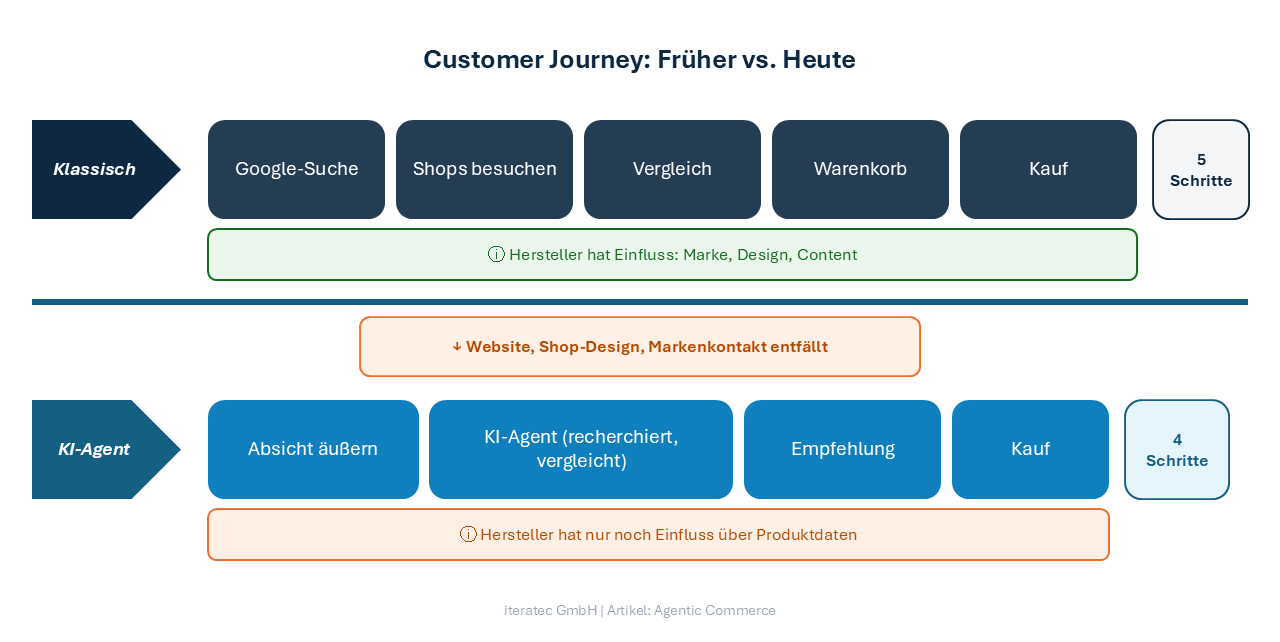
Fig. 2: Five steps become four – but the manufacturer’s influence shrinks to just one.
The difference lies in the fact that the agent does not visit a website in the human sense. It sees no hero banner, no brand video, no carefully designed layout – it reads structured, machine-readable product data. And on this basis, it decides which manufacturer to recommend.
The brand story that GartenProfi has built up over the years remains relevant – but it must be tradable into data. A TÜV seal embedded as an image on the product page simply does not exist for an AI agent. The same seal, however, when included as a structured attribute in the product data feed, is a sign of trust that directly influences recommendations.
An honest look: what’s really happening in Europe?
What is actually usable in Europe today is more limited than the announcements from the major platform providers would suggest – but that is no reason to sound the all-clear.
The major AI shopping features have so far been largely confined to the US: ChatGPT’s Instant Checkout, Google’s AI Mode Shopping and Perplexity’s direct purchase via PayPal are all aimed primarily at American retailers. There are a few pioneers in Europe – Carrefour in France lets customers put together shopping baskets via ChatGPT – but we are still a long way from a functioning European ecosystem for agent-driven commerce.
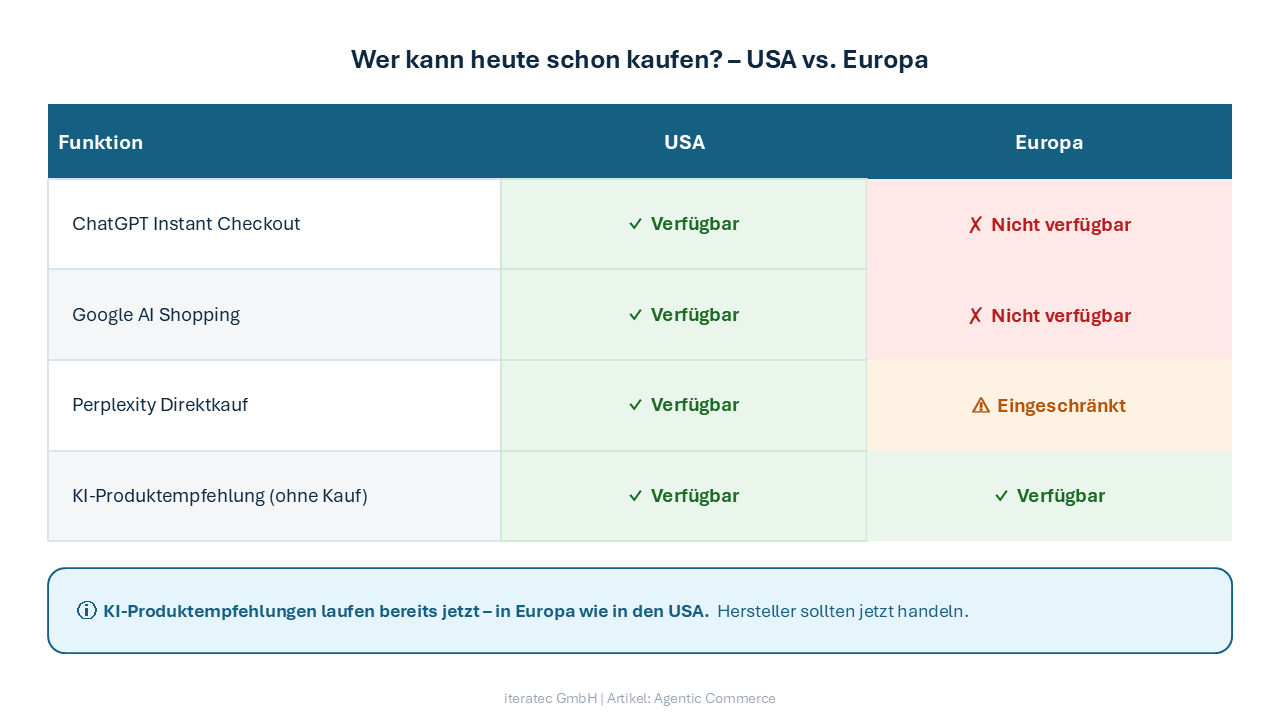
Fig. 3: Direct purchase not yet available in Europe – but recommendations are already up and running.
What is already working globally is the recommendation feature. If a customer in Germany asks ChatGPT, Gemini or Perplexity about a sun protection system, they receive a response. Products are compared, and manufacturers are named – or not. The purchase may still be finalised via a traditional online shop, but the decision as to which shop to visit in the first place is increasingly being made during the AI dialogue.
For European manufacturers, this raises a specific consideration: anyone who waits until agent-commerce is fully operational in Germany will find that the recommendation patterns have long since been established. The agents are now learning which manufacturers provide reliable data. When the purchase is finalised in Europe – and it will be – preference will be given to those manufacturers who are already visible.
Where do I, as a manufacturer, need to be visible?
The question for a manufacturer such as GartenProfi is not ‘Should I build my own AI server?’ – but rather: ‘Through which channels will AI agents find my products?’
Essentially, it’s the same challenge as Google visibility was fifteen years ago – just on a higher level.
Share of Answer is the AI-era version of the classic Share of Voice: it’s no longer about a spot on page 1, but how often an AI recommends my product when someone searches within my category. The key to this lies in structured, machine-readable product data – whoever lays the groundwork here today will succeed in a market where the most important buyer is no longer a human being.
Three paths are emerging:
Google Merchant Centre. The most pragmatic way to get started. GartenProfi probably already has a Merchant Centre feed for Google Shopping. Google’s AI shopping agent uses precisely these feeds. Anyone who maintains a complete, high-quality feed is already visible to Google’s agent. The effort involved is minimal, whilst the potential impact is significant.
Shopify Agentic Plan. Shopify automatically syndicates product data to ChatGPT, Perplexity, Microsoft Copilot and Google Gemini. An interesting point here is that, since early 2026, Shopify has also been offering this channel to non-Shopify retailers. GartenProfi could keep its Shopware shop and still gain visibility via Shopify’s Agentic channel.
Custom protocol integration. Anyone operating their own commerce stack – SAP, Shopware, custom – can implement the resulting protocols directly. This is the most labour-intensive approach, but it offers the greatest control. For most medium-sized businesses, this is currently a topic to monitor rather than implement.
The order follows the implementation timeline: from immediately feasible to relevant in the medium term. GartenProfi should check its Merchant Centre feed tomorrow, evaluate the Shopify Agentic Plan next month and assess its own API strategy in six months’ time.
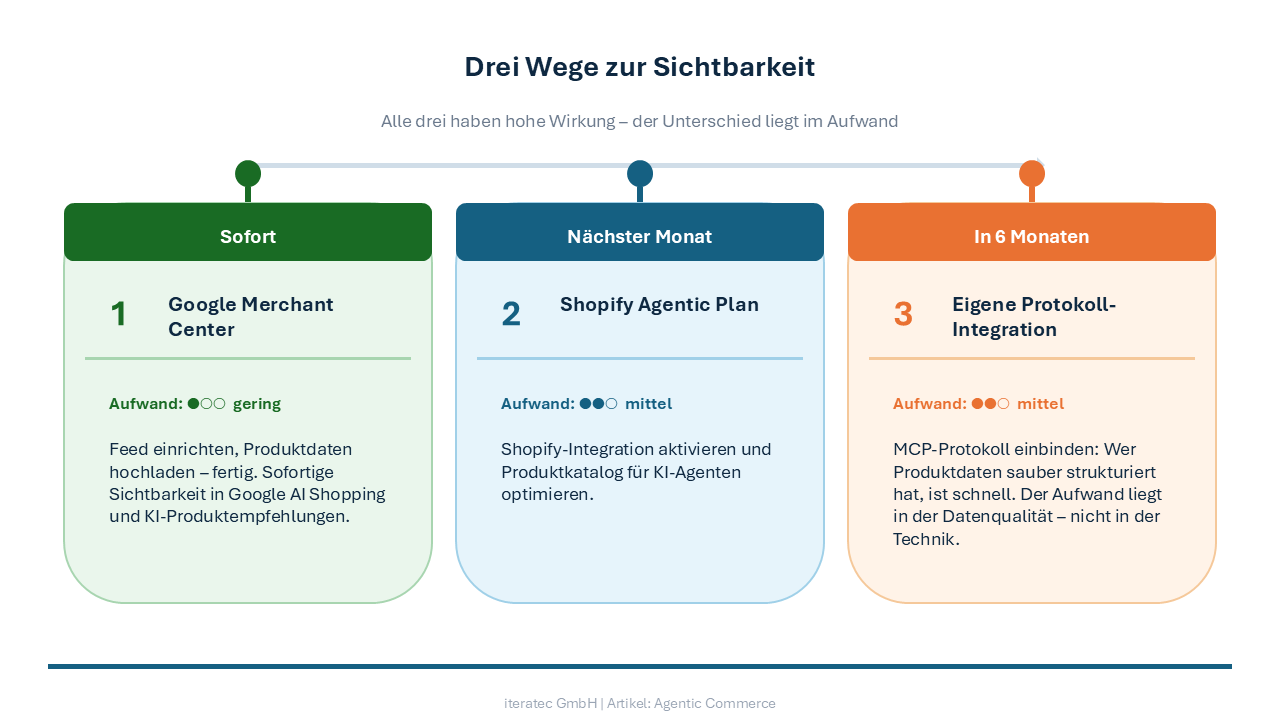
Fig. 4: From immediately to in six months’ time – categorised by effort required.
Why product data is now more important than ever before
‘Tidying up product data’ is a piece of advice that has been appearing in every e-commerce article for the past ten years. This time, there is a specific reason behind it: AI agents make purchasing decisions based on data, not on impressions.
Here’s an example. Two awning manufacturers, similar products, similar prices. A customer’s agent is looking for a solution for a 20-square-metre terrace with a concrete floor.
Manufacturer A offers: dimensions 500 × 500 cm, recommended area up to 22 m², UV protection UPF 50+, fixings for concrete and walls, wind load up to 80 km/h, delivery time 3–5 working days, TÜV-certified, 312 reviews with an average rating of 4.7.
Manufacturer B supplies: size ‘extra large’, material ‘high-quality sunshade fabric’, assembly ‘see instructions (PDF)’, delivery time ‘available shortly’.
The agent recommends Manufacturer A. Not because the product is better – in fact, Manufacturer B’s sail might even be of higher quality. But because, based on the available data, the agent cannot make a reliable recommendation for B. Is it suitable for 20 m²? Will it hold on concrete? When will it arrive? It’s all unclear.
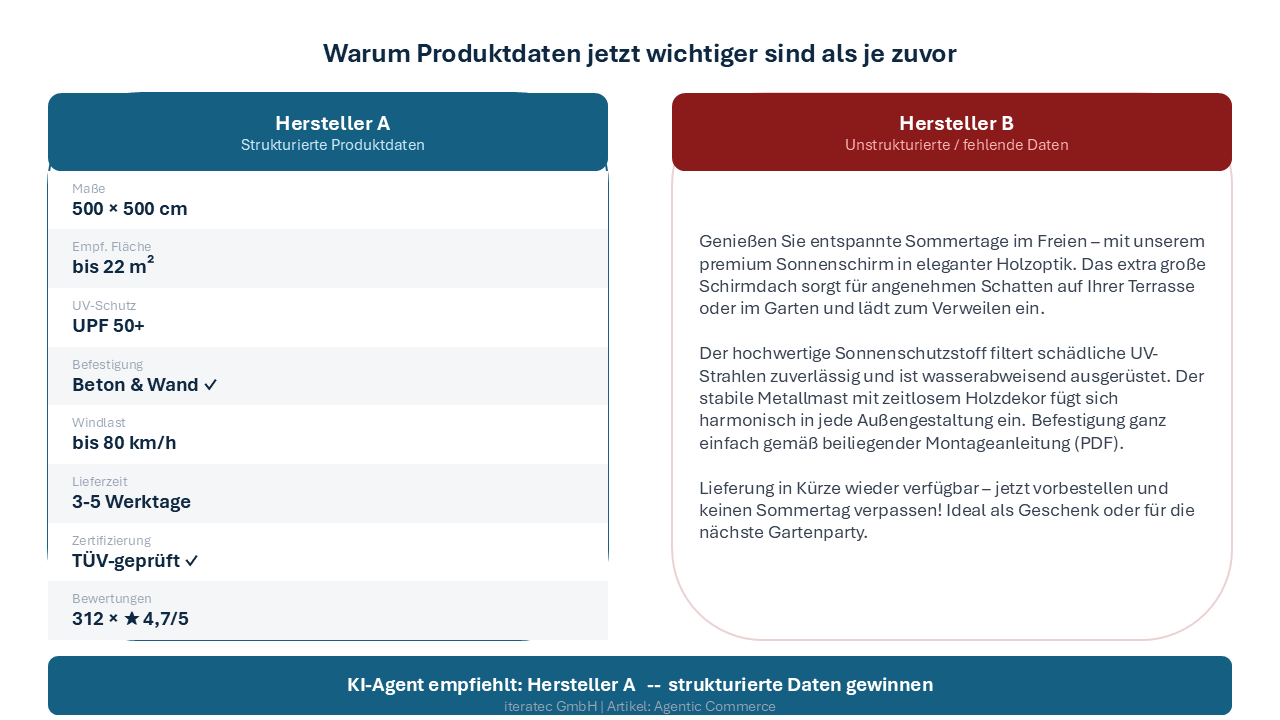
Fig. 5: It is not the better product that wins – but the one that is better described.
Manufacturer B probably has all this information. It’s in the PDF of the assembly instructions, on page 3. Or in the ERP system. Or in the product manager’s head. But not where an AI agent can read it.
The difference between a recommendation and invisibility rarely lies in an IT transformation. It lies in discipline – in providing product data in a complete, structured and consistent manner in a machine-readable format.
What the major players are building – and why the details aren’t important yet
Shopify, Google, OpenAI, Stripe, Amazon, Mastercard – they are all currently building the infrastructure for agent-commerce. Several protocols are competing: MCP, UCP, ACP, A2A. It remains to be seen which standard will prevail.
For a manufacturer like GartenProfi, it is not worth keeping track of this standards war. What matters is what remains constant, regardless of the outcome.
The answer is the same in any protocol landscape: structured, complete product data. Those who have it can cope with any standard; those who don’t won’t be saved even by the best protocol.
EY has coined the term ‘Generative Engine Optimisation’ (GEO) to describe this: the optimisation of content for AI models rather than for search engine crawlers. GEO does not replace SEO – it complements it. The foundation is the same: data quality.
What remains
One final aside before we conclude: for B2B, the change could prove even more fundamental. Procurement departments already operate in a rational and data-driven manner. A procurement agent that automatically requests quotations, compares framework agreements and triggers reorders is not a major conceptual leap. Manufacturers who supply both end customers and specialist retailers should keep an eye on both sides.
31 per cent of consumers are now willing to allow AI-driven purchases. At the same time, 69 per cent are not yet ready. In Germany, scepticism is likely to be even more pronounced (see Fig. 6). Agentic Commerce will not change everything overnight. But today’s 31 per cent will be the majority the day after tomorrow.
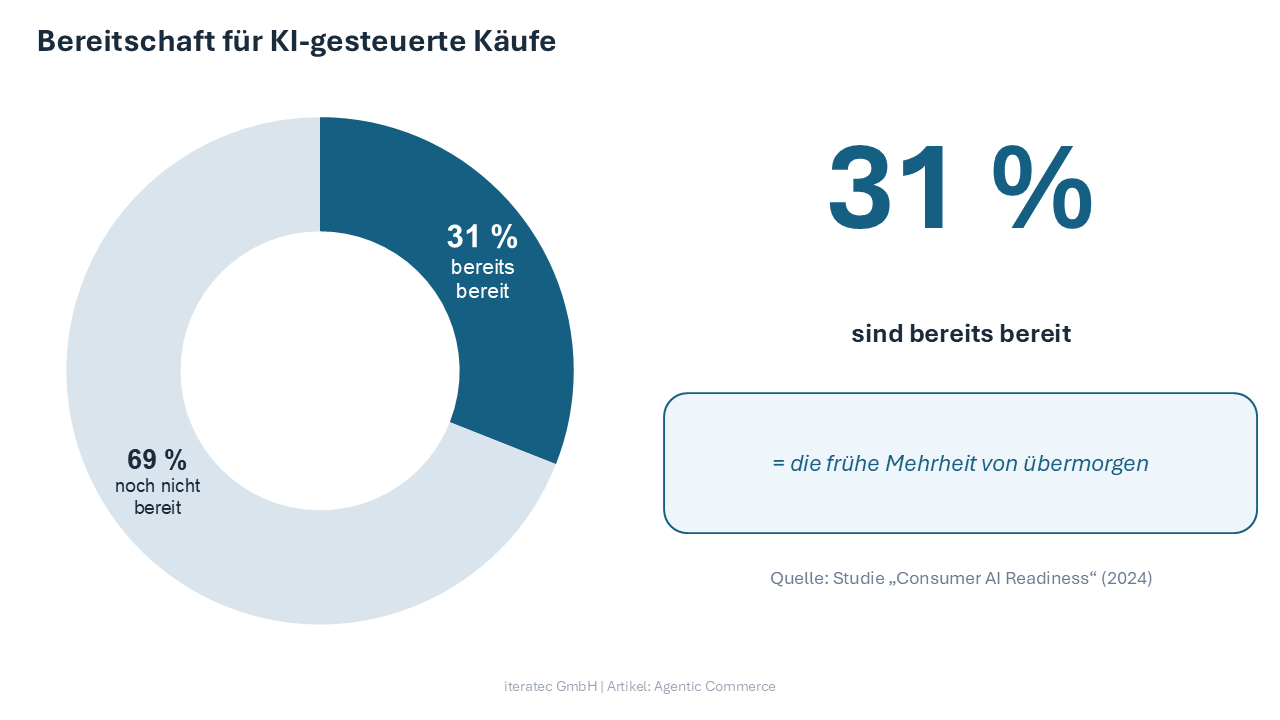
Fig. 6: 31 per cent today – the early majority of the day after tomorrow.
Getting started is cost-effective. McKinsey calculates that the preparation costs are so low that the investment is worthwhile even if adoption proceeds more slowly than expected. Checking the Merchant Centre feed, structuring product data, making trust signals machine-readable – these are not major projects, and they pay off regardless of Agentic Commerce.
GartenProfi doesn’t need to switch platforms or launch a transformation programme today. The key question is simple: if tomorrow an AI agent searches for the best sun protection system for a 20-square-metre terrace – will it find us, and what will it find? If you want to test this, you don’t need a major project, just three specific steps:
Step 1: Check the Google Merchant Centre feed. Are all product attributes fully completed? Dimensions, materials, certificates, delivery times – in a machine-readable format, not as PDFs or continuous text. This isn’t an IT task; it’s data maintenance.
Step 2: Run a product through ChatGPT, Gemini and Perplexity as a test. Simply ask: “Which awning is suitable for a 20-square-metre terrace with a concrete floor?” Does your own product appear? What does it say? The result reveals where the gaps lie more quickly than any audit.
Step 3: Make trust signals visible. TÜV certification, average rating, warranty terms – if this information exists only as a graphic on the product page, it does not exist for AI agents. It does, however, exist as a structured attribute in the feed (see Fig. 5).
In practice, these steps can be assigned to three levels of action – and the order is rarely arbitrary. In most cases, the first level already determines how much benefit the subsequent ones will bring.
First, the data. The first step is to take stock: which attributes are missing, available only as PDFs, or inconsistent? Product data from ERP, PIM and CMS must be consolidated into structured, machine-readable formats – tailored precisely to the existing stack, without having to set everything up from scratch.
Then there’s visibility. Existing commerce systems can be connected to AI platforms via clean interfaces – ideally in a protocol-independent manner (see Fig. 4). Those who provide structured data via reliable APIs remain visible, regardless of which standard prevails.
And finally, the applications. Trust signals such as TÜV seals and average ratings can be utilised as feed attributes, virtual product advisors complement your own shop, and content can be optimised for AI models rather than just for search engines.
You don’t need a major programme to achieve this. Often, a concise initial assessment is enough to clarify how your own shop currently appears to AI agents, and to derive a prioritised roadmap from this – from feed quality to API strategy. The barrier to entry is low; the key is not to put it off for too long.
Sources: McKinsey & Company: The Agentic Commerce Opportunity (2025) · Deloitte: Agentic Commerce – A Guide to AI Shopping Agents (2025) · EY: When AI Goes Shopping (2026) · Shopify: Agentic Commerce Documentation (2026) · Anthony Laneau: The Agentic Commerce Buyer’s Guide for CPG Decision-Makers (2026)
Make your shop visible to AI agents!
Check how your product data currently appears to AI agents – and develop a prioritised roadmap: from feed quality and structured trust signals to your API strategy.
We’ll show you how to make your business AI-ready on our website. Please feel free to get in touch with us.

Authors

|
Stefan Herrmann Stefan Herrmann is a team coach and business analyst at iteratec and a member of the GenAI Excellence Group. He advises teams and departments on where and how generative AI can be usefully applied in day-to-day work. In doing so, he focuses both on the available tools and technologies and on identifying the areas where their use delivers tangible benefits. |

|
Konrad Haslberger As a senior software developer specialising in the automotive and manufacturing sectors, he works at the interface between technical implementation and the demands that generative AI places on organisations. He has practical experience in integrating AI-based solutions and focuses on how these actually function within a business context. |

|
Christian Bell Christian Bell is Head of Strategic Partnerships at iteratec. Drawing on the challenges faced in various markets and business sectors, he focuses on how companies can strategically integrate AI agents into their business models – from agentic commerce to the orchestration of hybrid human-machine teams. His aim is to develop targeted solutions across the ecosystem and bring together relevant expertise. |