csm_Legacy_intelligence_1_web_27ca06c88e

LEGACY INTELLIGENCE

A system too important to change becomes a business too slow to adapt

Every business has systems nobody dares to touch

Most companies use AI. However, few have made significant changes as a result. The organisations making the fastest progress are not necessarily the ones with the best AI strategy. They are the ones whose systems and organisations can actually adapt.

Core systems built decades ago control core processes along the value chain, from offer to product customer operation and billing. These systems were never designed for the speed and adaptability that AI demands. Business depends on them, nobody dares to touch them.

The result is missing Process Intelligence (end-to-end) hidden risk, costs and lost opportunity. Legacy Intelligence makes these constraints visible and actionable.


What is Legacy Intelligence?

At iteratec we engineer intelligence for future businesses.

Legacy Intelligence is our approach for making business-critical systems changeable again. We start by making the unknown known: what systems actually do, what dependencies they have and what it takes to change them savetly.

Starting with certainty. 

AI dramatically reduces the time and cost of understanding complex software. What once took months of analysis now takes days. Dependencies, business logic, and critical paths become visible before any decision is made. Understanding your systems is the prerequisite for everything that follows. 

legacy_intelligence_720x960

How to get it right

Start with what you already have.

We start from where your business currently stands, rather than from where a framework tells us to begin. Our analysis provides a comprehensive overview of your systems, dependencies, and risks before planning the first modernisation step.

Understand before you change.

AI-powered code analysis, review and stakeholder interviews make sense of what has grown over years in weeks. Dependencies, business logic and critical paths. This reduces uncertainty before it becomes a decision blocker.

It's risk improvements.

Every modernisation step is designed so that your business can keep running. This involves parallel operation, incremental migration and clear rollback options. Business decisions are embedded directly into engineering.

Every change makes the next one cheaper.

The goal is not just a modernised system. It is an organisation that can change faster than its competitors. Once you have a deep understanding of one system, subsequent systems take less time.

How to start

Using a customised ATAM framework, domain-driven design (DDD) combined with a 360-degree approach, we identify what to preserve, modernise or replace. Whether you need a second opinion or a complete modernisation roadmap, we turn complex landscapes into secure, scalable and future-ready systems.

csm_iteratec_Artificial_intelligence_8_c9b6b39b06

Legacy hyperSPRINT

4
days

We work with your key decision-makers to create clarity on where to start. This includes risk and opportunity mapping, rapid prototyping, and a clear plan of action to present to your board.

csm_legacy_Intelligence_1_03e739dcb3

System Health Check

10
days

You know exactly what your system contains, what depends on it, and what it would take to change it. AI-powered code analysis makes that possible without months of manual work.

csm_Sample_6_65d4df81cb

System Review

20
days

You will have a prioritised modernisation strategy. Built on your actual system, not assumptions. AI-powered analysis combined with stakeholder interviews and process mapping gives you the full picture.

  • Phase 1: Inventory and assessment

    We determine the current requirements together with the relevant organisational, technical and technological stakeholders.

  • Phase 2: Strategic design

    Together with the relevant stakeholders, we evaluate the technical and technological target architecture and context and translate the results into a roadmap. This is based on domain-driven design and proven change management principles.

  • Phase 3: Tactical design

    We specify the strategy in iterative epics and work packages, prioritise according to effort, risk and customer benefit, and ensure that business continuity is guaranteed at all times. Implementation is closely integrated with your teams, continuously validated and documented.

  • Phase 4: Transition

    The transition will take place gradually, for example through parallel operation, migration, selective dismantling and the controlled replacement of obsolete system components. This will ensure that the new solution is introduced in a stable manner without jeopardising ongoing operations.

The real cost isn’t just what you spend. It’s your business that can’t adopt.

Today, most IT capacity in large organisations is devoted to keeping existing systems running. Budgets are consumed by legacy infrastructure, technical debt, outdated applications, and increasingly complex environments – leaving little capacity for innovation, transformation, and future growth.

Legacy Intelligence helps organisations understand where intelligence lives today – not olnly in documented processes, but across legacy code, applications, data, integrations, and the expertise of the people who maintain them. Teams identify dependencies, assess risk, priorities, and preserve critical business logic as systems evolve. By making this hidden knowledge visible, it enables sound investment decisions and helps validate business their IT, AI, and data strategies.

Nothing happened

A successful modernisation changes everything about your future and nothing about your Monday morning.

csm_Dachser_Reference_2_15297f0877

DACHSER | AIR & SEA LOGISTICS

The decisive question was not: How do we build a new system? But: How are our processes even ready for AI?

70

redundant process attributes removed — without interrupting operations.

AI

runs in production on the modernised architecture.

csm_RIFF_Reference_0005cf0e83

DEUTSCHE BAHN | RiFF

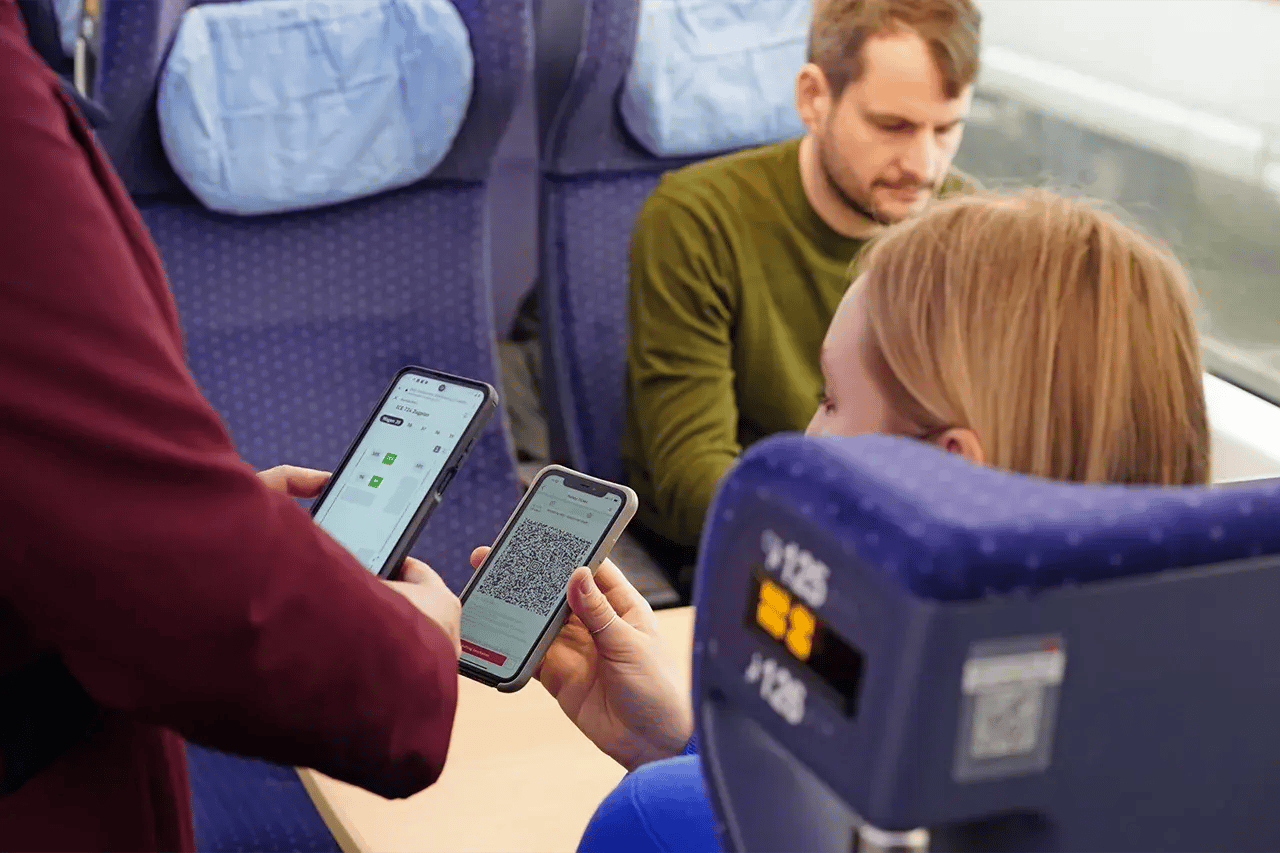
A 40-year-old reservation system. Two failed predecessor projects. It was replaced without a single traveller noticing. 

5x

lower operating costs after modernisation

10%

under budget. Completed 6 months ahead of schedule.

Ready to make the untouchable changeable?

Your system won't get simpler by waiting. Let's get in touch.

Julian Autenrieth, Lead Innovation Strategist