Our everyday lives depend on digital processes, whether in our private or professional lives. And artificial intelligence (AI) is fundamentally changing the way this interaction works. From personalised recommendations to automated decisions – AI utilises enormous amounts of data to optimise work processes, boost efficiency and support people in their capabilities.
The integration of AI is leading to a fundamental shift in the way users interact with software. Furthermore, the underlying systems, interfaces and their architecture are also changing.
For businesses, this transformation brings new challenges as well as immense opportunities, such as improved customer experiences or optimised processes. We explore how AI is changing the way we interact with software and systems.
- Natural language is the new interface
- Adapting the user interface
- Modernisation as an opportunity and a necessity
- Human-in-the-loop
- Challenges and future prospects
Natural language is the new interface
Before ChatGPT came along, interaction with software was characterised by specific query languages and complex menu structures. In some cases, this required users to have specialist knowledge or to undergo training.
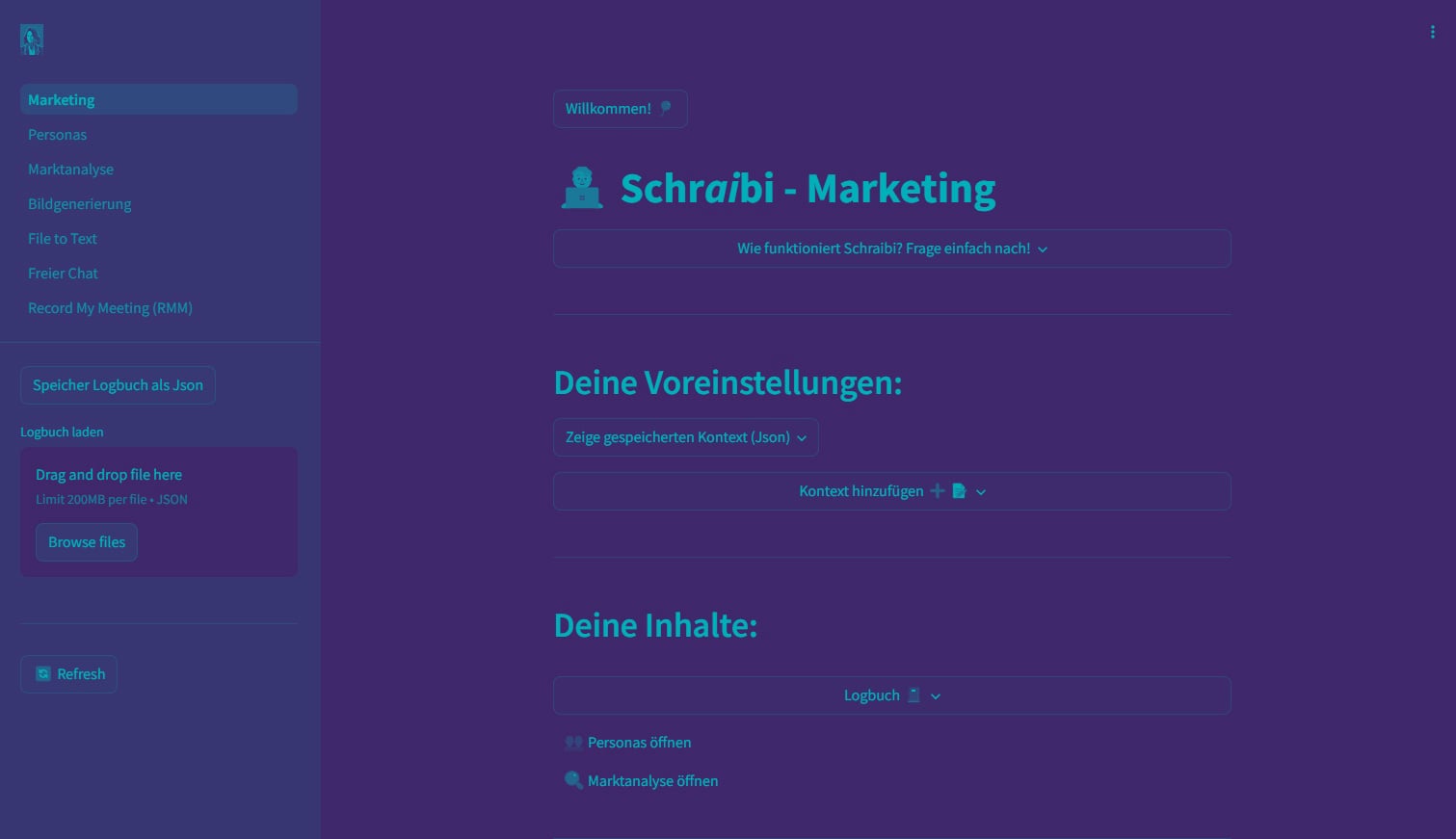
AI ‘understands’ humans: anyone who can speak a human language can now interact with software.
Users of these applications can now formulate requests in natural, human language, with the software interpreting the instructions and delivering the corresponding results. Above all, this approach broadens access to complex systems for users without prior knowledge. In short: everyone can now interact with software.
A good example is a customer support service that has integrated AI into its online platform. Instead of navigating through confusing menus or putting up with long waiting times, an AI-powered chatbot enables direct, intuitive and almost human-like interaction via text or voice input. Not only is this faster and more efficient, but it is also significantly more personalised – despite the lack of human interaction.
Furthermore, AI chatbots can do things that human staff simply cannot, such as generating documents on the spot in a desired format or triggering entire process chains. They expand the range of capabilities surrounding the interaction.
Furthermore, an online assistant in the public sector can be completely reimagined, for example when it comes to managing planning applications. Instead of having to wade through complex forms and regulatory requirements, an AI-powered assistant enables direct, intuitive and almost human-like interaction. A civil engineer asks: “What documents do I need for a planning application in Berlin?” and the chatbot replies quickly and comprehensively: “For a planning application in Berlin, you will need the following documents: site plan, construction drawings, (…). Would you like more details on the requirements for the site plan?” This type of communication not only makes the administrative process more efficient but also ensures a user-friendly solution tailored to the needs of the experts.
💡Read our Champion Story too: AI agent platform for carrying out complex financial analyses
Customisation of the user interface
Instead of complicated user interfaces, AI enables the development of more intuitive and user-friendly mechanisms, such as simpler navigation and the reduction of unnecessary complexity.
There are also entirely new dimensions: users can now interact with software not only via text or mouse clicks, but also multimodally via speech, gestures or even eye tracking. In future, these multimodal input options could allow for a more flexible and intuitive use of software that adapts to the respective contexts and requirements of users. For example, certain functions, suggestions or information can be displayed contextually when they are relevant in a particular situation.
The way in which results can be presented is also changing. Instead of using rigid, predefined formats, AI can present results in any way it chooses – precisely as the user requires: it can meet people where they are by providing results in a variety of forms. Short, concise results or complex expert answers tailored precisely to the user’s specific requirements, supported by the ability to adapt results quickly. Whilst in a traditional application, for example, one has to accept a document as it is, with AI one can engage in a dialogue and incorporate changes immediately. This results in greater interaction than in rigid applications.
This ranges from simple text output and traditional text documents through to visual representations, interactive 3D models and multimedia content such as audio and video files.
Modernisation: an opportunity and a necessity
The integration of AI places significant demands on system architecture. Traditional, tightly coupled architectures, which are based on fixed structures and rigid processes, are increasingly inadequate for providing the flexibility and scalability required for AI integrations and applications. More modern architectures, on the other hand, with modular and service-oriented approaches, can enable rapid adaptation and expansion of functionality and efficiently distribute the load across different services.
This is particularly important, as AI systems introduce a whole new dimension to existing systems, and this simply necessitates the appropriate foundations.
Data is a fundamental prerequisite for deploying AI: these applications rely on the processing of vast amounts of data. Consequently, the introduction of AI requires a fundamental overhaul of the data architecture to ensure that data streams are organised efficiently and made accessible.
Systems that fail to adapt to the new requirements risk falling behind their competitors. Such modernisation would then involve, for example, migration to the cloud, as well as containerisation and orchestration using Kubernetes, in order to deploy AI models in a scalable environment and update them continuously.
Human-in-the-loop
But be careful! Whilst AI is certainly revolutionising things, the ‘human-in-the-loop’ approach is simultaneously becoming increasingly important. Whilst AI is capable of processing large volumes of data and delivering initial results, human expertise remains indispensable for verifying and refining these outcomes. This is because, despite numerous advantages, automated decisions are not always error-free. For example, they tend to adopt biases from the data.
A ‘human-in-the-loop’ can optimise the results of an automated system or monitor its decisions to ensure that the final results are both accurate and contextually relevant.
Challenges and future prospects
Integrating AI into software interaction therefore not only brings benefits, but also poses new challenges for software development. It is often not possible simply to ‘plug it in’.
One of the greatest challenges lies in ensuring safety and ethical standards when using AI. Systems that are increasingly making decisions autonomously must be designed in such a way that they comply with applicable guidelines and ethical standards.
In future, the continued development of AI technologies will further revolutionise interaction with software. Software solutions are likely to become increasingly intelligent, adaptable and user-friendly.
This modernisation is therefore not only the next logical step in technological development, but also a necessary adaptation to the rapidly changing demands of the digital world.
Do you have any questions or need assistance?