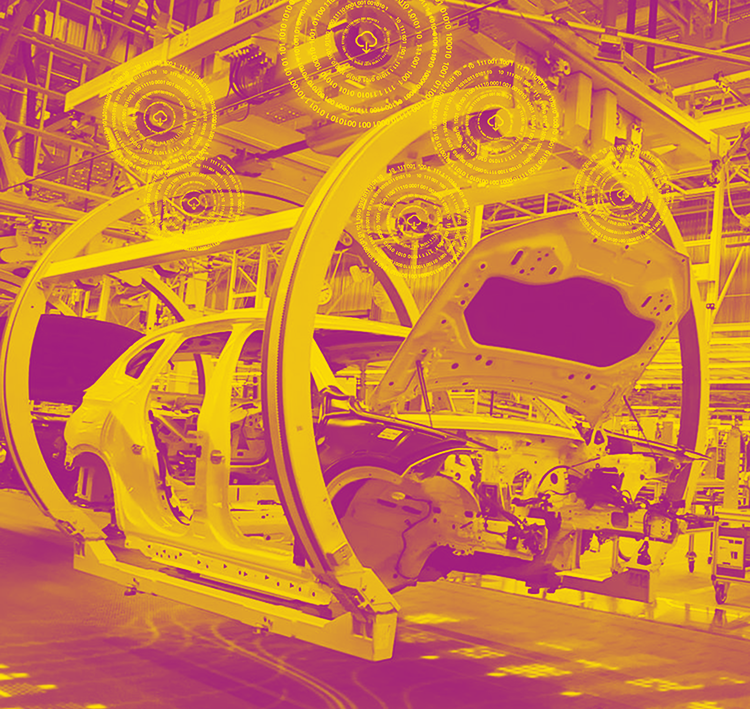
Tracking product life cycles is becoming increasingly complex. The Digital Product Passport (DPP) can untangle this complexity and promote a sustainable transformation of the industry.
Introduction to the Digital Product Passport
The DPP is an initiative developed as part of the European Green Deal to promote a holistic approach to product sustainability and transparency.
It acts as a digital certificate containing comprehensive information on every aspect of a product, from manufacture through to the end-of-life process. This passport is designed to enable consumers to make informed decisions and to encourage businesses to operate more sustainably.
The significance of the DPP in the context of global sustainability
The introduction of the DPP is a response to the growing demand for environmental responsibility and sustainable business practices. By providing detailed information on the environmental impact, recyclability and reparability of products, the DPP supports the objectives of the circular economy. It helps to reduce waste, optimise resource use and minimise the environmental footprint of products.
Technological Foundations and Challenges of the DPP
The implementation of the DPP poses technological challenges, particularly with regard to data storage, security and management.
Blockchain technology could play a key role by providing a decentralised, transparent and secure environment for storing product information.
Nevertheless, companies face challenges such as integrating this technology into existing systems and ensuring data protection.
Possible technical solutions
To implement the Digital Product Passport (DPP) effectively across various sectors, a combination of blockchain technology and decentralised identity management (DID) can be used. This ensures a high level of security, transparency and control over data access.
The choice of blockchain platform plays a crucial role in this:
Avalanche, for example, could enable sensitive product data to be stored securely using private subnets, whilst ensuring the integrity and immutability of the information.
DID can help to establish differentiated access levels, so that, for example, government agencies can gain deeper insights than competitors.
Through the use of smart contracts, changes to product data can be traceable, transparent and carried out only by authorised entities.
Potential benefits and cost-effectiveness of the DPP
The DPP offers not only environmental but also economic benefits. By improving transparency in the supply chain, companies can streamline their processes, reduce costs and improve product quality.
Furthermore, the DPP can open up new business opportunities by laying the foundations for innovative services and products focused on sustainability and transparency.
Future prospects and development paths for the DPP
The future of the DPP looks promising, with plans for wider adoption across various sectors. The ongoing development of norms and standards will be crucial to ensuring its effectiveness and acceptance. Cooperation between governments, industry and consumers will be crucial to realising the vision of a fully transparent and sustainable supply chain.
The Digital Product Passport as the foundation for digital experiences
In the world of digital experiences, the Digital Product Passport – designed as a token on a blockchain – opens up opportunities to link physical products with exclusive digital benefits.
Imagine that owning a product not only provides you with an excellent physical item, but also grants access to exclusive experiences: from invitations to special events, through access to VIP chats and art galleries, right through to a loyalty programme managed on the blockchain.
By linking the product passport to the product via barcodes or NFC, a seamless bridge is created between the physical and digital worlds, allowing customers to immerse themselves more deeply in the brand’s world. This integration has the potential to revolutionise the customer experience by creating a new dimension of interaction and value that goes far beyond the traditional product purchase.
Conclusion: The DPP as a trailblazer for a sustainable future
The Digital Product Passport is more than just a technological tool; it represents a paradigm shift in the way we think about product life cycles and sustainability.
Its successful implementation can foster a new awareness of environmental responsibility that strengthens not only the ecological but also the socio-economic foundations of our global economy.
Do you have any questions or need assistance?
You can find out more about the opportunities Web3 offers your business on our website.
Please feel free to contact us or arrange an appointment.
 Nico Heinze is Project Division Manager and Web3/DLT Lead at iteratec GmbH in Munich. He advises businesses and public sector organisations on the implementation of blockchain-based applications and is in charge of the iteratec Blockchain Lab. He works with various distributed ledger technologies, such as IOTA and Hashgraph, and represents iteratec GmbH on the board of Blockchain Bayern e.V.
 Andreas Berghammer is an IT professional with a passion for structured and reliable solutions in complex IT fields. He is an expert in blockchain technology and has developed Web3 projects such as NFT drops and DAPPs.