Biocentral is making complex AI models for biomedical research centrally accessible and easy to use for the first time – without the need for programming skills, but with maximum impact for science and education.
TECHNICAL UNIVERSITY OF MUNICH | AI FOR BIOMEDICAL RESEARCH
- Company
- Champion Stories
- TU Munich| AI for biomedical research
Key points at a glance
How a collection of disparate models became a central platform for better research
In biomedical research, two trends are converging: the volume of available data is growing rapidly. At the same time, the existing technologies and tools for analysing this data are often too fragmented, technically complex or of limited use. As a result, researchers spend a great deal of time searching for models, resolving technical dependencies or manually adapting software to their needs.
Particularly in the field of AI-supported analysis of biomedical data, whilst there are many powerful models, these are scattered across various repositories, written in different programming languages and often cannot be maintained. The result is that enormous potential remains untapped – for instance, in the rapid development of medicinal compounds.
Together with the Technical University of Munich, iteratec has specifically addressed this problem and further developed the existing open platform Biocentral. The aim was to create a scalable, intuitive and future-proof solution that makes biomedical data analysis more accessible and powerful.
Biocentral makes AI accessible to everyone
The joint team of researchers from the Technical University of Munich and AI experts from iteratec developed Biocentral as an open platform that makes powerful AI models easily accessible for biomedical research. One example of this is the SETH model, which can quickly identify disordered regions in protein structures and is relevant to Alzheimer’s research, amongst other areas. At the heart of the platform are state-of-the-art deep learning methods, in particular so-called protein-language models. These models – inspired by developments such as AlphaFold, which was honoured with the Nobel Prize in 2024 – enable a new level of quality in the prediction and analysis of biological structures.
Biocentral brings these highly specialised models together in a user-friendly environment that can be used in both research and teaching. The aim was not merely technical integration, but a genuine simplification of access to AI, without the need for programming skills and without hidden dependencies.
A milestone for open, AI-driven science
A key element of the implementation was the standardisation of the AI models: originally developed using PyTorch – a machine learning library that is labour-intensive to maintain in production environments – they were systematically migrated by the iteratec team to the open ONNX format. This not only ensures independence from proprietary frameworks, but also long-term maintainability and interoperability.
This step required extensive technical work – in some cases, PyTorch functionalities had to be reprogrammed to ensure ONNX compatibility. Together with the Technical University of Munich, our colleagues developed bespoke solutions. In addition to standardising the models, we took charge of the relevant aspects of the platform’s backend development. All models were embedded in accordance with the highest standards of scientific software, ensuring reproducibility, validation and transparency throughout.
Its release as an open-source platform on GitHub ensures that the global scientific community can benefit from the solution and continue to develop it. Biocentral is therefore not just a research project, but an invitation to collaboration and a catalyst for open science.
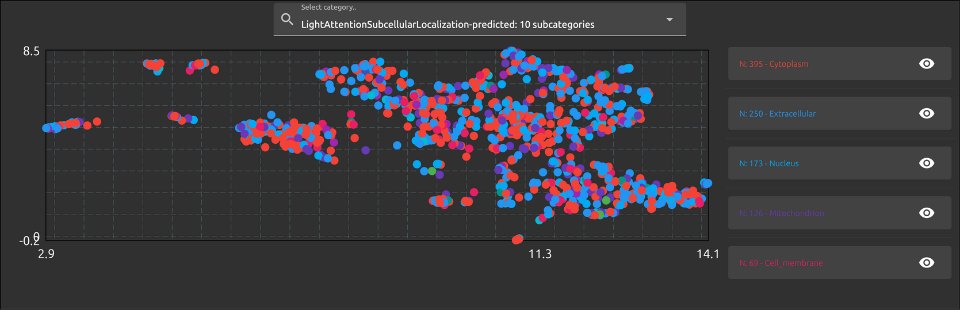
Using AI without coding: a real game-changer for laboratories
Biocentral provides researchers, for the first time, with a central platform where they can work with various AI models without having to familiarise themselves with how they work technically or operate them themselves. The platform abstracts technical complexity, thereby making the potential of modern AI truly accessible, even for smaller research units or university research groups.
Researchers can apply existing models directly, analyse data, validate hypotheses and generate new insights – more quickly, more reliably and in a standardised manner. This is of particular benefit to biochemical, pharmaceutical and medical research teams, which have previously been unable to use machine learning due to a lack of resources or expertise.
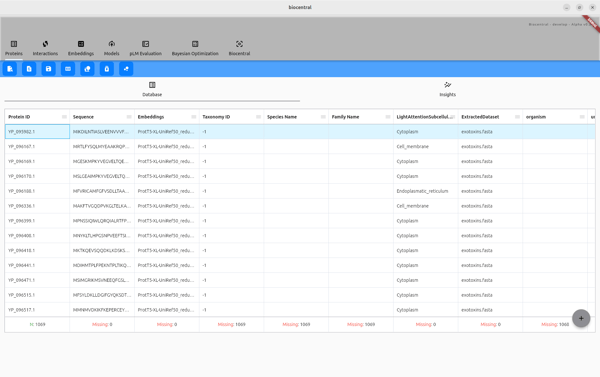
Biocentral is growing, and so are the opportunities
The development of Biocentral is still in its early stages: in future, the platform is set to be expanded to include further biological data sources and analytical functions. The long-term vision is a central, interdisciplinary working platform that not only accelerates scientific exchange but also supports the development of new active substances and the planning of preclinical studies.
When technology meets research, true innovation is born
Biocentral is a research tool that makes a real impact:
It brings together innovative biomedical AI systems on an open, maintainable and standardised platform. Nothing like this has existed before. The collaboration between our colleagues at iteratec and the experts at the Technical University of Munich demonstrates what is possible when technological expertise and scientific curiosity come together.
This form of AI-supported research provides a catalyst for the future of biomedical science.
Working with iteratec GmbH was a very pleasant experience – they developed solutions to tricky problems in a reliable and determined manner, which saved us a great deal of time here at the department. We are delighted by the interest shown in our field of bioinformatics research and are firmly convinced that innovative technology, combined with cutting-edge research, creates optimal synergies for both sides. We’d be happy to work with them again!
Sebastian Franz, Technical University of Munich
Python, PyTorch, ONNX, Flask, Jupyter Notebook
- Convert existing open-source PyTorch models to ONNX models, partially reimplementing PyTorch’s native functionalities, and ensuring consistent model results
- Submitting pull requests to the repositories of the models used, to make the code publicly available and traceable
- Designing an architecture to embed the many models, with their varying input and output requirements, into the existing server code in such a way as to ensure maximum maintainability
- Implementation in accordance with the proposed architecture
- With over 52,500 students, the Technical University of Munich (TUM) is the largest technical university in Germany in terms of student numbers. Its main areas of focus are engineering, technology, medicine and the applied natural sciences.
More about TUM - The Rostlab (TUM I12 – Chair of Bioinformatics), named after its founder Prof. Dr Burkhard Rost, has been actively involved in the latest methodological developments in the field of bioinformatics for over 30 years. Among other things, it has developed the protein language models ProtT5 and ProstT5 and uses the latest AI methods to create predictive models for protein properties.
Your contact
Do you have a specific request or questions about possible AI and data analytics projects for your company? Send a request and we will get back to you.
Dr. Felix Böhmer, Director Al & Data Analytics

More Champion Stories
FAQ
Biocentral provides centralised access to powerful AI models for biomedical research and makes them easy to use. Researchers can analyse biomedical data, validate hypotheses and gain new insights without any programming knowledge. The platform is used in both research and teaching, thereby accelerating scientific work.
iteratec has further developed the open platform Biocentral in collaboration with the Technical University of Munich. Our colleagues have standardised AI models, taken charge of parts of the backend development and embedded the models in accordance with high standards for scientific software. As a result, what were once scattered, hard-to-maintain models have been transformed into a scalable, intuitive and future-proof platform.
Biocentral utilises modern deep learning techniques, in particular protein language models. One example is the SETH model, which can rapidly identify disordered regions in protein structures and is relevant to Alzheimer’s research, amongst other things. The platform is inspired by developments such as AlphaFold and enables a new level of quality in the prediction and analysis of biological structures.
Many of the original models were developed in PyTorch and were difficult to maintain in production environments. By systematically migrating them to the open ONNX format, dependencies on proprietary frameworks are reduced. This enhances the platform’s maintainability, interoperability and future-proofing, and makes it easier to deploy the models in various environments.
Biocentral is aimed at biochemical, pharmaceutical and medical research teams, as well as university research groups. They can use AI models without having to familiarise themselves with how they work technically or operate their own infrastructure. This lowers the barriers to entry, saves time in the laboratory and makes modern AI methods accessible even to smaller research units.