
A financial services provider uses AI agents for financial analysis to give all employees easy access to complex data—thanks to an orchestrated multi-agent platform that operates in natural language and is both secure and scalable.
The analysis of financial data—for example, in the context of credit decisions or financial statement audits—is an extremely demanding task that requires highly specialized expertise and dedicated tools to model complex valuation logic. To ensure that this expert knowledge does not become a bottleneck in the future, given rising analytical demands and a growing shortage of skilled workers, a leading financial services provider sought ways to support analytical processes using AI and thereby effectively relieve the burden on financial analysts.
However, the client’s vision went far beyond a simple automation solution: rather, the company wanted to give its employees intuitive access to the data available in its benchmarking and analytics platform. Users in the business departments should be able — regardless of their level of expertise — to interact with the data using natural language, ask questions of the dataset, and generate custom reports.
iteratec supported the client from the very beginning in implementing this ambitious vision—and did so by adopting a novel technological approach: To ensure the system met requirements for speed, scalability, and adaptability, the team designed and developed what is known as a multi-agent architecture. This took the concept of the single AI agent a step further: Instead of an LLM-based agent that has access to the data and is capable of generating visualizations, etc., the work is divided divided across the agent team.
The resulting multi-agent system consists of several specialized AI agents that work together like an orchestra to handle complex tasks. Each agent performs a specific technical or functional task—ranging from interpreting and categorizing chat requests to conducting specific analyses and generating graphical representations. Through the interaction of the individual agents, the system can operate much more efficiently and flexibly than comparable single-agent approaches. The result is a tool that allows users to ask questions of the dataset in natural language and receive personalized results in real time—in the form of text, tables, or graphics.
By breaking down highly complex analytical processes into individual task packages executed by agents optimized for this purpose, a highly flexible and scalable architecture is created that can support a wide variety of use cases. This approach will enable the implementation of additional output formats in the future—such as for generating specialized reports—or the integration of additional data sources to perform further analyses in other business areas using the same technology stack.
The storage and processing of financial metrics in the context of financial analysis is a sensitive area, as it involves highly confidential information about companies, investors, or markets and forms the basis for far-reaching decisions. To meet the specific requirements for system security and reliability, iteratec has developed innovative approaches to ensure the quality of results and data security:
Generative AI systems behave in a non-deterministic manner, meaning that even with identical inputs, different results may be produced. To ensure the reliability of the analysis results nonetheless, iteratec has developed a new set of quality metrics as well as automated testing procedures for continuously monitoring result quality. This makes it possible to ensure the quality of the system even when individual components change, for example, during an update of the LLM being used.
To prevent misuse of the system—such as the unauthorized extraction of personal data or other forms of unwanted data leakage or manipulation—an agent has been developed that automatically detects, blocks, and reports such attack attempts. In addition, LLM responses are automatically checked to ensure that users are not shown any suspicious or manipulative responses.
The distributed architecture of the multi-agent system makes it possible to perform various stages of data processing either in the cloud, on cloud instances hosted in Europe, or on-premises, thereby effectively integrating different data spheres into a single system.
iteratec supported the project from the initial concept through to a fully functional MVP and is currently overseeing the implementation and further development of the system. Since the approach to GenAI projects differs significantly in some respects from that of traditional software development projects, iteratec supported the client throughout the entire development period with intensive project management and by providing a technical Product Owner role, which ensured effective and efficient solution development in this technical environment that was new to the client. In this way, a solid and scalable technical foundation for building further future-oriented AI services within the company was established in a short period of time.
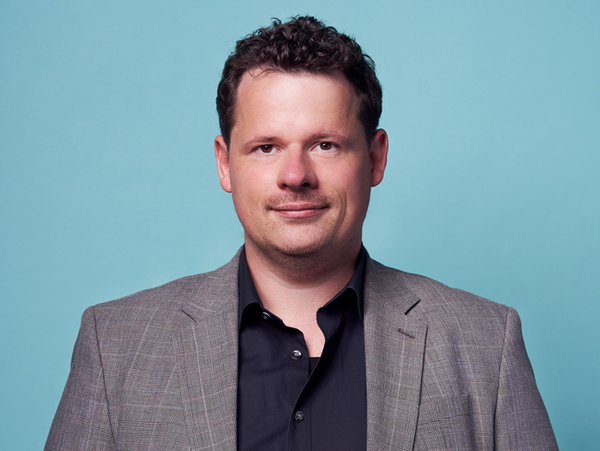
Do you have a specific request or questions about possible AI and data analytics projects for your company? Send a request and we will get back to you.
Dr. Felix Böhmer, Director Al & Data Analytics
Generative AI behaves in a non-deterministic manner. iteratec has therefore developed new quality metrics and automated testing procedures that continuously monitor the quality of results—even when individual system components, such as the LLM used, change.
Employees can ask questions about financial data using natural language—such as credit checks, balance sheet analyses, or customized financial reports—and receive results in the form of text, tables, or charts in real time.
Unlike single-agent chatbots, the multi-agent system distributes tasks among specialized agents. This improves performance and flexibility and enables more complex analytical processes that a single agent could not handle efficiently.


![[Translate to en:] Person mit einem Mikroskop](/fileadmin/_processed_/a/3/csm_iteratec_Sustainable_Solutions_5_6816875404.jpg)